
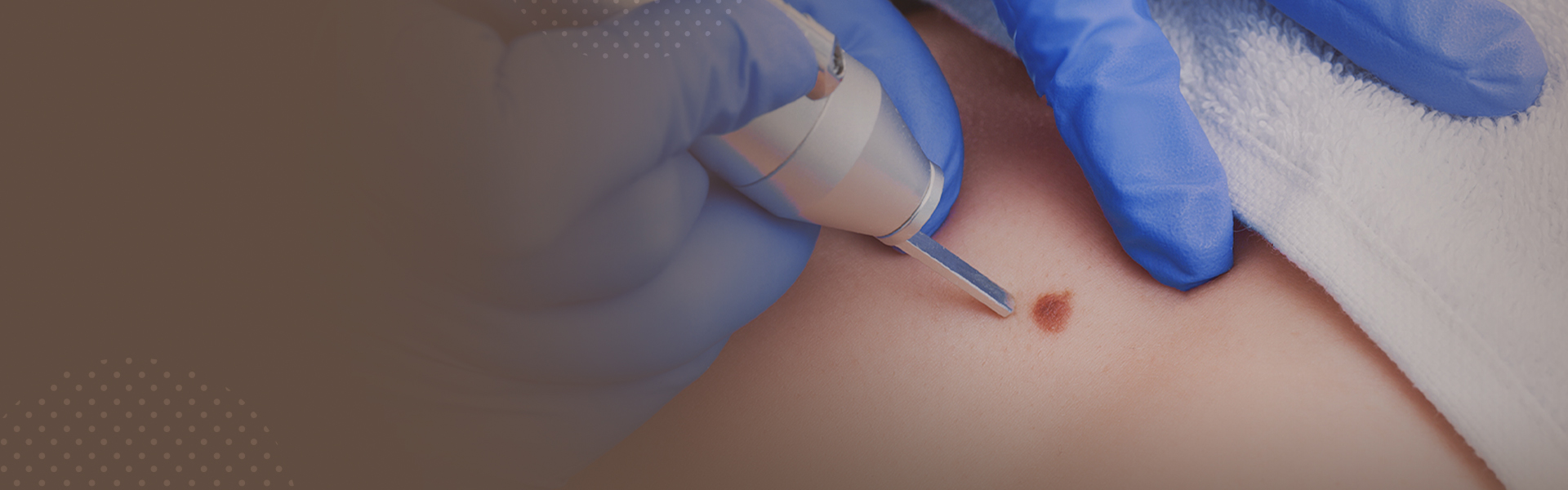

What is Mole Removal?
Moles are usually benign. However, there are also malignant moles that have a low risk of developing cancer. In a certain period of life, benign moles can turn into malignant ones. For this reason, it is important to be checked periodically by a specialist doctor.
Moles in the face and neck area disturb some people aesthetically. It can cause psychological problems such as self-confidence. People who experience this situation resort to mole removal. This method is more preferred than surgical operations.
How Long Does Mole Removal Treatment Take?
The duration of mole removal treatment varies depending on factors such as the method used, the size, and location of the mole, and individual healing times. Some procedures for mole removal can be completed in a matter of minutes, while others may take longer. After the treatment, the healing process can take weeks to months for the skin surface to fully recover and the mole to completely disappear. It is important to consult with a healthcare professional for guidance on the specific timing for your mole removal treatment.
How Is Laser Mole Removal Procedure Performed?
With the advancement of technology in medicine, laser methods are applied instead of surgical methods applied in mole removal. Laser treatments are preferred due to some advantages. However, laser is not sufficient in every mole removal procedure.
Differences such as the size of the moles, color, and the level of swelling from the skin are effective in determining the type of procedure to be applied. Mole removal methods are as follows:
Mole Removal with Surgery: It is applied by making an incision in the skin area where the mole is located. Local anesthesia is applied before the procedure. An incision is made approximately twice the size of the mole. The mole is cleaned and removed together with its root. The patient is discharged the same day after the procedure. Dressing is required in the days following the procedure. Stitches are removed after a few weeks. After mole removal, a slight scar or pitting may remain on the skin.
Laser Mole Removal: Laser mole removal is applied to moles that are benign and the root is not too deep. It does not involve surgical procedure. It is a fast method with immediate results. It is performed under local anesthesia. There is no scar after the procedure. The patient immediately returns to normal life.
Mole Removal with Radiofrequency: It is a non-surgical mole removal method. The devices used in radiofrequency mole removal produce radio waves. It destroys moles by vaporization method. It can be applied on small and benign moles.
Do Moles Regrow?
The possibility of regrowth of the removed moles makes people think a lot. If the procedure is not performed by experts with quality devices, the mole may form again if there are cells left behind. Mostly within a month, the cells left behind as a result of mole removal multiply and mole formation begins again. However, even if it occurs again, it is possible to repeat the same procedure with laser.
Is Mole Removal Harmful?
All non-malignant moles can be easily removed. The belief that you will get cancer due to mole removal is completely wrong. As long as you follow your doctor’s recommendations before and after mole removal, this application is not a harmful procedure.
How many sessions are required?
Depending on the type and size of the mole, usually one session may be sufficient. However, larger or deeper moles may require more than one session.
Frequently Asked Questions
How ıs the healıng process after the procedure?
Mild redness and crusting may occur after the procedure. The crusts usually fall off within a few weeks and renewed skin appears underneath.
For whıch types of moles ıs ıt suıtable?
Laser mole removal is generally used for pigmented (colored) moles or brown spots. It can be preferred for benign moles that do not cause aesthetic problems.
Is the procedure paınful?
Mild discomfort may be felt during the procedure. Local anesthesia or cooling methods can be used before the procedure.